Latest News
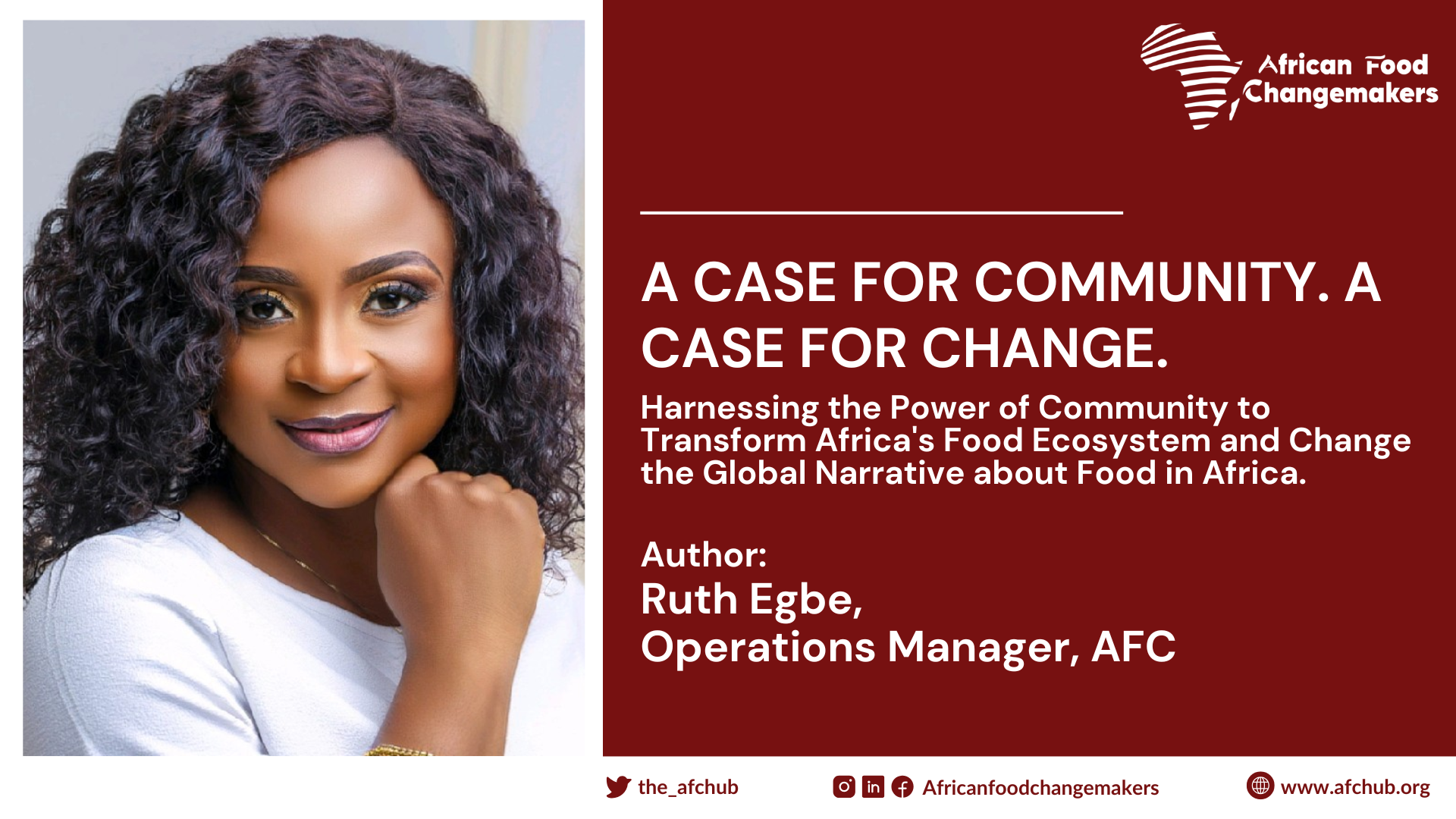
A CASE FOR COMMUNITY. A CASE FOR CHANGE.
There is a popular African proverb that says, “If you want to go fast, go alone, but if you want to go far, go together.” This proverb highlights the importance of collective effort and community in achieving long-term success. It reflects the traditional African values of ubuntu – “I am because you are” - and interconnectedness, which emphasizes the importance of working together for the greater good.
In Africa, community is more than just a concept – it's a way of life. Ruth Egbe
Historically, African cultures have placed a strong emphasis on community and collective responsibility, with extended family networks and community ties being crucial for survival and overall well-being. These networks provided support, shared resources, and helped ensure everyone's basic needs were met.
However, the erosion of cultural values that unite Africans presents a significant challenge. Colonization, urbanization, and globalization have contributed to the breakdown of traditional community structures and the loss of cultural heritage, creating a void that threatens the fabric of our societies. As Africa's food ecosystem shifts from a community-based way of life to one focused on individuality, our sense of well-being is impacted, and our sources of well-being become fragmented. The consequences are severe: increased food insecurity, decreased nutrition, and a growing disconnection from our cultural heritage.
Despite these challenges, hope remains. A growing movement acknowledges the significance of reconnecting with cultural heritage and rebuilding strong, supportive networks. This resurgence of community spirit extends beyond Africa, representing a global phenomenon that seeks to redefine how we live, work, and interact.
In Africa's food ecosystem, this movement presents a compelling case for change. By harnessing the collective strength of community and leveraging cutting-edge technology, we can revolutionize food production, processing, and consumption, creating a more sustainable, equitable, and just food system for all.
As Africa grapples with food insecurity, climate change, and the pursuit of sustainable development, it's clear that individual actions alone won't be enough. Sustainable solutions depend on collective efforts and integrated elements, with a strong, inclusive community being essential. The aspects of community—trust, cooperation, shared values, and social connection—hold the key to achieving long-lasting transformative change.
By reclaiming and redefining what it means to be a community in the 21st century, we can harness the power of Ubuntu to create stronger, more resilient food ecosystems that prioritize the common good. This approach recognizes that community-based food systems are vital to our cultural identity and collective well-being, steering us toward a more sustainable and equitable future.
This necessitates a deliberate effort to create spaces and opportunities for community engagement, social connection, and collective action within the food sector. It also requires that we challenge the prevailing narratives that favor industrialized agriculture over community-based food systems, while acknowledging the value of our indigenous knowledge systems and cultural practices.
By returning to our roots and leveraging technology to foster a sense of community and enhance productivity, we can unlock the potential for collaborative problem-solving, shared knowledge, and collective action within Africa's food ecosystem. We can harness the power of digital platforms to connect farmers, producers, consumers, and other stakeholders while still honoring the traditional values of Ubuntu.
Envision a continent where community members can unite to share knowledge, skills, and experiences, utilizing technology to enhance their collective impact on the food ecosystem. Envision a continent where farmers, entrepreneurs, innovators, and social change-makers work together to create solutions to our most urgent food challenges, from hunger to malnutrition.
There is no need to stretch our imagination. One example of a technology-driven, community-focused vehicle for change in the African food ecosystem is African Food Changemakers, also known as the AFC. Founded in 2022 through the merger of Nourishing Africa and Changing Narratives Africa, both established by Ndidi Okonkwo Nwuneli in 2019 and 2021, respectively, the organization operates under the belief that small and medium-sized enterprises are the lifeblood of the African food ecosystem. The hub unites visionary, dynamic, and innovative entrepreneurs who drive these enterprises, including primary producers, aggregators, processors, distributors, finance and technology providers, chefs, cooks, consultants, and innovators.
With the mission to empower one million Agrifood entrepreneurs to scale successful and sustainable agribusinesses by 2023, AFC provides a virtual hub for connection, interaction, information, and education to help them mitigate the devastating impacts of climate change, as well as global and local risks, shocks, and macro- and micro-economic challenges affecting their businesses. Through readily available learning and development opportunities, these entrepreneurs can access funding, training, visibility, market linkages, and a supportive community to successfully scale their businesses.
Furthermore, by pooling their efforts, sharing resources, exchanging ideas, and building expertise, entrepreneurs collaborate to learn from one another, enhance their capacity, form cooperatives for better pricing, access new markets, and invest in sustainable agricultural practices. This collective approach has improved the business operations and output of the thousands of Agrifood SMEs that are part of the community. As AFC facilitates the growth of the returns, reach, and recognition of these entrepreneurs, they are ultimately empowered to become changemakers.
On a broader level, the elements of community can also catalyze innovation in the African food ecosystem. By bringing together diverse stakeholders—farmers, entrepreneurs, researchers, policymakers, and ecosystem enablers—the outcome is co-created solutions that address the complex challenges facing our food systems. This collaborative approach can lead to the development of new technologies, business models, integrated systems, and policies that promote sustainable agriculture, improve food security, and enhance the livelihoods of African farmers.
So, what can we do to harness the power of the community to transform Africa's food ecosystem?
- Invest in hub-powered, community-led initiatives that support growth partnerships, farmer cooperatives, urban agriculture projects, and other community-driven efforts promoting sustainable agriculture and enhancing food security.
- Mobilize funding to facilitate peer-to-peer learning, complemented by deep and immersive capacity-building programs that bridge gaps in financing, climate resilience, and trade capabilities and build the competence of Agrifood entrepreneurs to scale.
- Promote digital equity by facilitating digital skills training to upskill farmers and agrifood entrepreneurs, enabling them to leverage digital resources and other emerging technologies to enhance their operations, increase productivity, and access new markets.
- Support the participation of these entrepreneurs in the convergence of diverse stakeholders to connect, share knowledge, expertise, and best practices in sustainable agriculture and food systems, and collaborate on their implementation.
- Promote inclusive and equitable decision-making, which ensures that community members, particularly smallholder farmers and women, have a voice in decision-making processes that affect their livelihoods and the food ecosystem.
By harnessing the power of community, we can create a sustainable, equitable, and resilient food ecosystem in Africa. By combining the wisdom of our ancestors with the innovation of the digital age, we can create a brighter future for Africa, one that is built on the principles of community, solidarity, and collective prosperity. Let us work together to transform Africa's food ecosystem and change the global narrative about food in and from Africa, showcasing our community-driven, sustainable, and resilient food systems as a model for the world.